

What You'll Learn
- See how storms can trigger sudden AC failures
- Learn which warning signs need fast action
- Understand when diagnostics help avoid bigger damage
- Know why humidity and drain issues worsen cooling
- Make faster repair decisions after a storm
In Pensacola, summer afternoons often bring the kind of storms that can leave an air conditioner struggling by evening. If your system starts blowing warm air, short cycling, or shutting down after heavy rain, a prompt response can keep a small issue from becoming a major failure. This guide explains why post-storm problems happen, what warning signs to watch for, and when emergency AC repair in Pensacola is the smartest move to protect your comfort and your system.
Why Afternoon Storms Often Trigger AC Trouble
Afternoon storms create a perfect stress test for cooling equipment. Heavy rain can expose drainage problems, lightning can affect controls, and utility fluctuations can strain electrical components. At the same time, outdoor humidity rises fast, which forces your AC to remove more moisture from the air while still trying to hold the thermostat setting. If your system already has a weak capacitor, a partially clogged drain line, or a control issue, the storm may be what pushes it into failure and creates the need for emergency AC repair in Pensacola.
Many property owners assume the storm itself directly damaged the unit, but the pattern is often more subtle. A system may have been operating on the edge for weeks and only reveal the problem when weather conditions become extreme. If you want context on how often urgent cooling issues show up locally, review this overview of emergency AC repair timing in Pensacola. It helps explain why recurring strain can eventually lead to a breakdown at the worst possible moment.
Heavy rain and clogged drain lines
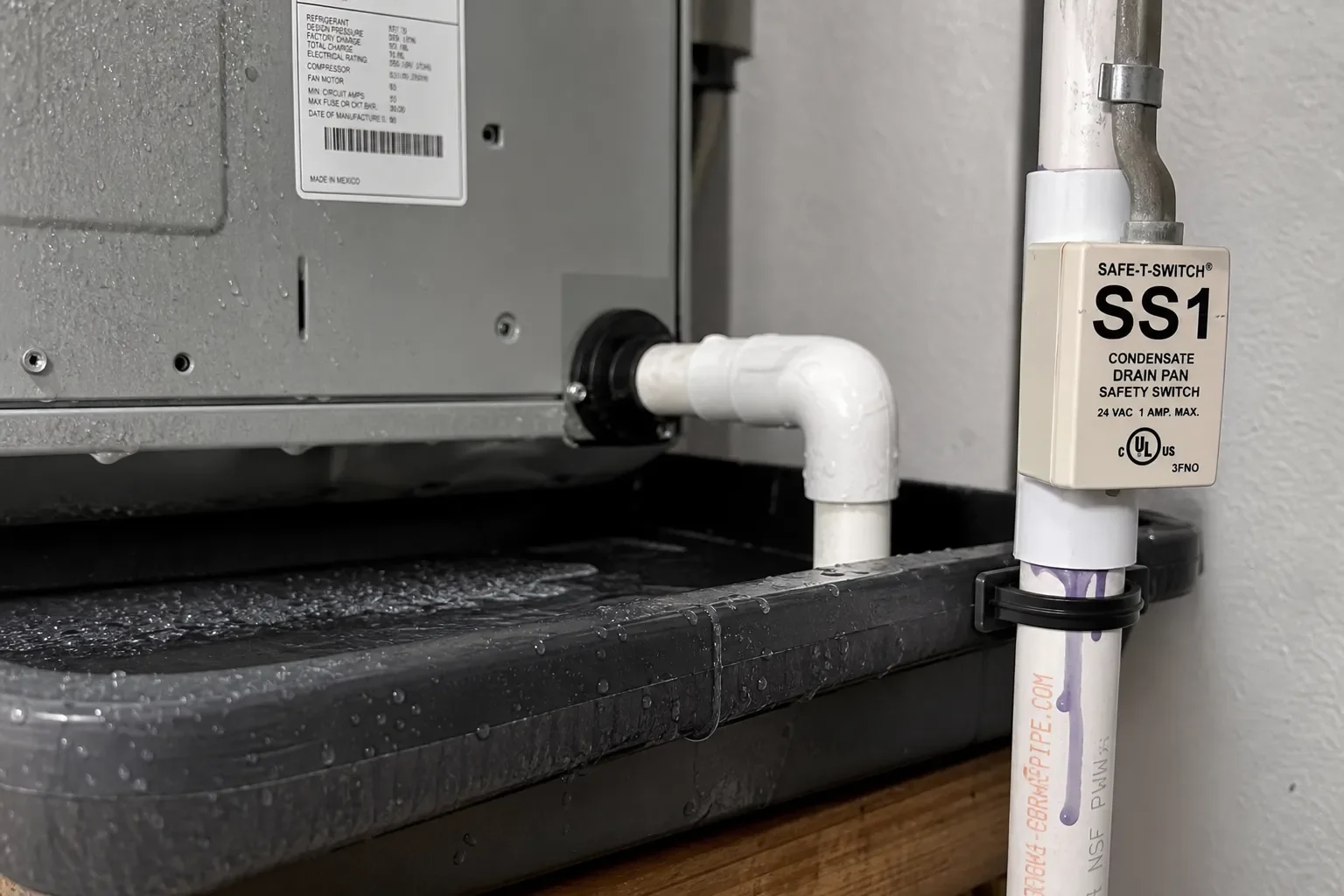
One of the most common post-storm issues is a condensate drainage problem. During humid weather, your AC removes a large volume of moisture. If the drain line is partly blocked, a storm-day humidity spike can overwhelm it. Some systems then trip a safety switch and stop cooling to prevent water damage. Others may keep running but cool poorly because moisture is not being managed the way it should. When your system suddenly stops after a storm and the thermostat appears normal, drain-related trouble is one reason homeowners end up needing emergency AC repair in Pensacola.
Lightning and Power Surges
Lightning does not need to strike your home directly to create problems. Nearby strikes and grid instability can send surges through electrical systems, affecting capacitors, contactors, control boards, and thermostats. Sometimes the AC stops completely. In other cases, the outdoor unit hums but does not start, or the system runs without delivering normal cooling. If your AC acts differently right after flickering lights or a thunderstorm, electrical damage should be considered quickly before repeated restart attempts make the situation worse and increase the urgency of emergency AC repair in Pensacola.
Storm-related electrical symptoms can overlap with age-related wear, which is why diagnosis matters. If you are also seeing rising operating costs, you may find it useful to read why energy bills keep rising in Pensacola even after AC repairs. And if you are trying to understand whether repeated failures point to a larger decision, this guide on AC repair or replacement decisions for a Pensacola property provides helpful background.
How Humidity Spikes Make Cooling Problems Look Worse
Even when a storm does not directly damage equipment, the humidity that follows can make an existing issue much more obvious. High indoor moisture makes rooms feel warmer, so occupants notice discomfort sooner. A system with reduced airflow, a weak run component, or a drainage restriction may still run, but it may not remove enough humidity to maintain comfort. That is why many calls for emergency AC repair in Pensacola come in after the rain has ended, when the house feels sticky and the thermostat number no longer matches how the space actually feels.
- The AC runs constantly after the storm but indoor air still feels damp
- The thermostat reaches the set point slowly or not at all
- Airflow seems weaker than usual from supply vents
- The system turns on and off more often than normal
- You notice water near the indoor unit or drain area
When a Professional Diagnostic Is the Smartest Step
After a storm, symptoms can point in several directions at once. Warm air could come from a failed electrical component, a tripped safety switch, or a control problem. Poor comfort could be tied to humidity, airflow, or a system that is only partially operating. A professional diagnostic helps identify the actual cause before more parts are stressed. In many cases, that is the most efficient way to decide whether you need immediate emergency AC repair in Pensacola or whether the issue can be addressed before it escalates into a full no-cooling event.
This matters even more when the symptoms seem inconsistent. For example, some rooms may feel much hotter than others, or the AC may run but never quite satisfy the thermostat after the weather changes. Those patterns can resemble breakdowns but may involve airflow or distribution concerns. For added perspective, see why some rooms stay hot even after AC repair and why an AC may run without reaching the thermostat setting. While those articles discuss related symptoms, storm timing is a strong reason to prioritize fast evaluation in Pensacola.
Signs you should not wait
- The outdoor unit will not start after lightning or a power flicker
- The AC is blowing warm air during high heat and humidity
- The system shuts off repeatedly after short run times
- You hear buzzing, clicking, or humming that is new after a storm
- Water is pooling around the indoor equipment
- Indoor conditions are becoming unsafe for occupants or equipment
Why Fast Action Can Prevent a Larger Emergency
Small post-storm issues rarely improve on their own. A restricted drain can lead to repeated shutdowns. A damaged capacitor can progress to a total no-start condition. A surge-affected contactor can cause unreliable operation that puts more wear on the compressor. Addressing symptoms early may help limit secondary damage, reduce downtime, and restore comfort before indoor temperatures climb. That is the real value of acting quickly when you suspect you need emergency AC repair in Pensacola: you are not just responding to discomfort, you are trying to stop a manageable problem from becoming a much more disruptive one.
It also helps to keep the bigger picture in mind. If storm after storm seems to expose a new weakness, your property may be dealing with a pattern rather than a one-time event. Reviewing related guidance such as what larger cooling decisions can cost can be useful when repeated failures start affecting planning. But when the immediate problem is sudden loss of cooling, the first priority remains accurate diagnosis and timely emergency AC repair in Pensacola.
What Pensacola Property Owners Should Do Right After a Storm
Start with simple observation. Check whether the thermostat is on and calling for cooling, listen for the outdoor unit, and look for visible water near the indoor equipment. Note whether the issue began right after lightning, heavy rain, or a brief outage. Then avoid opening equipment or attempting electrical resets beyond basic safe checks. The combination of moisture and power-related damage is exactly why post-storm systems should be evaluated carefully. Clear details about timing and symptoms can help speed up emergency AC repair in Pensacola and reduce guesswork.
In Pensacola, afternoon storms can turn a marginal cooling issue into a same-day comfort problem. Heavy rain, surges, lightning, clogged drain lines, and humidity spikes all have the potential to push an AC system past its limit. When those warning signs appear, emergency AC repair in Pensacola is often the most practical way to prevent a bigger breakdown, protect the system from added damage, and restore dependable cooling as quickly as possible.