
What You'll Learn
- Spot common duct issues that keep rooms from cooling evenly
- Understand when duct repairs solve comfort and efficiency problems
- Know when replacement is more cost-effective than patching old ducts
- Learn how hidden airflow losses raise runtime and energy use
When an air conditioner runs for long stretches but still struggles to hit the thermostat setting, many property owners assume the equipment itself is the only problem. In reality, air duct replacement and repair services in Navarre are often the missing piece. If conditioned air leaks into attics, crawl spaces, or wall cavities before it reaches the rooms you use, the system can appear to be working nonstop while comfort stays inconsistent. For homeowners and business owners in Navarre, understanding how duct performance affects temperature control is the first step toward a practical, cost-conscious fix.
This issue usually shows up as a pattern rather than a sudden failure. You may notice certain rooms stay warmer than others, the thermostat reading takes too long to drop, or the system seems to run hardest during the most humid parts of the day. In many cases, the core problem is not just age or heavy use. It is lost airflow, poor duct design, disconnected runs, crushed flex duct, or return-side restrictions that keep the system from delivering the cooling capacity it should. A thorough evaluation helps determine whether targeted repairs will restore performance or whether larger sections of the duct system need replacement.
Why an AC Can Run Constantly Without Reaching the Set Temperature
When conditioned air does not move efficiently through the duct system, the thermostat can keep calling for cooling even though the equipment is already running as intended. Supply leaks reduce how much cooled air reaches occupied rooms, while return leaks can pull in hot, unconditioned air that makes the system work even harder. Ducts that are undersized, poorly routed, or damaged can also create pressure imbalances that reduce comfort across the property. If this sounds familiar, our article on why some rooms stay hot and when duct repair is the real fix explains how airflow problems often hide behind persistent hot spots.
Restricted airflow can be just as damaging to performance as air leakage. When ducts are kinked, sagging, or partially blocked, the system may still run, but room-by-room delivery drops. That means the thermostat location may cool slowly while distant rooms lag even further behind. Over time, this added strain can make an older system seem like it is failing when the distribution network is the real culprit. In properties where square footage has changed over time, our guide to air duct replacement and repair services for home additions and converted spaces highlights why original duct layouts often stop matching current needs.
- Leaky supply ducts that dump cooled air before it reaches living areas
- Return-side leaks that pull in hot, humid air from unconditioned spaces
- Undersized or poorly designed duct runs that limit airflow
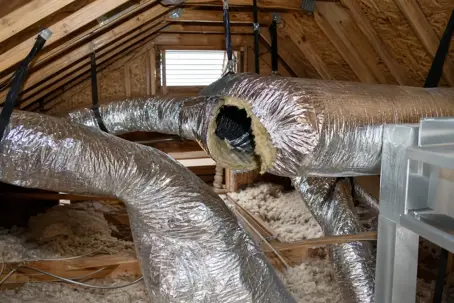
- Crushed, disconnected, or deteriorated duct sections
- Restricted returns that prevent balanced circulation
Signs Air Duct Replacement and Repair Services in Navarre May Be the Right Solution
A professional diagnostic often reveals clues that point directly to the duct system. High runtime with uneven room temperatures is one of the most common. Others include weak airflow from some registers, excessive dust around vents, whistling or rattling sounds, and temperature differences between rooms that never seem to go away. If the equipment still operates but the property does not cool evenly, duct-focused corrections can produce meaningful gains in comfort and efficiency without jumping to conclusions.
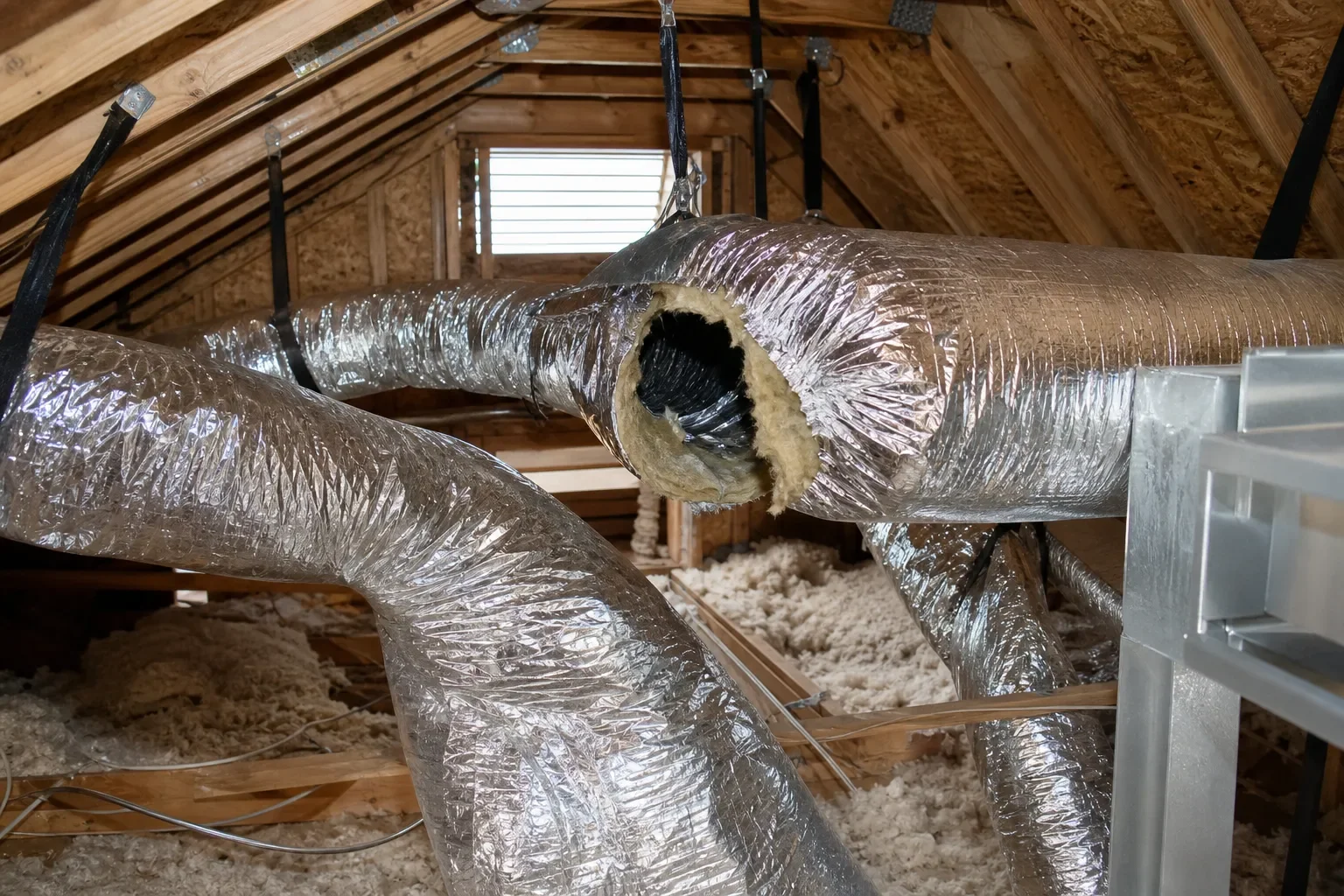
Repair is often the better path when the duct system is fundamentally sound but has isolated failures. Examples include a disconnected branch, leaking joints, damaged insulation, or a few sections of flex duct that have been crushed or routed poorly. In those cases, sealing, reconnecting, supporting, or replacing specific sections can improve airflow and reduce wasted cooling. If you are comparing repair versus larger upgrades, you may also find value in reading how homeowners can decide between air duct replacement and repair services, which outlines the practical decision points professionals look for.
Replacement becomes the smarter option when problems are widespread or built into the original design. Ducts that are too small, badly laid out, heavily deteriorated, or patched repeatedly may continue to waste energy even after multiple repairs. In those cases, replacing major sections or redesigning the system can be more cost-effective over time than chasing the same comfort complaints season after season. This is especially true when the property has undergone changes that the original ductwork was never designed to support.
What a Professional Duct Diagnostic Should Evaluate
To determine whether repair or replacement makes sense, a technician should look beyond the thermostat setting and inspect the full air distribution path. That includes checking visible duct condition, testing airflow, identifying leakage points, reviewing supply and return balance, and noting how the duct layout serves each room. A proper evaluation should also consider whether recent comfort complaints stem from hidden performance losses rather than a single obvious break. For a broader look at why diagnosis matters before major decisions, see how homeowners can tell when a professional diagnostic is better than guessing at the problem.
In some buildings, duct defects and equipment age overlap. An older system may already have less effective output, and leaky ducts compound the issue by wasting part of what the equipment still produces. That is why some owners hear about central air replacement during the diagnostic process. Even then, it is critical to understand that replacing equipment without addressing faulty ductwork can leave major comfort and efficiency problems in place. Our discussion of repair versus central air replacement decisions reinforces the idea that distribution problems must be part of the evaluation.
When Duct Repairs Make More Sense Than Full Replacement
Localized repairs are often enough when the underlying duct design is appropriate and only a few components have failed. If most runs are intact, properly sized, and accessible, repairing leaks, reconnecting separated joints, or replacing limited damaged sections can restore performance without the disruption of a larger rebuild. This approach is especially effective when comfort complaints are recent and tied to a specific event, such as work in the attic, storm-related shifting, or visible damage to one branch line.
Repairs can also be worthwhile when testing shows the majority of airflow loss comes from a handful of correctable trouble spots. In that scenario, the goal is to stop conditioned air from escaping, improve delivery to occupied rooms, and reduce system runtime. The key is making sure the repairs address the real bottleneck rather than just the easiest one to reach.
When Air Duct Replacement Is the Better Long-Term Investment
Full or partial duct replacement is usually the better long-term choice when the existing system has multiple chronic weaknesses. Common examples include widespread leakage, deteriorated materials, poor sizing throughout the property, missing returns, or layouts that no longer fit how the space is used. In these cases, repeated patching may offer only temporary improvement. Replacing defective sections allows airflow to be corrected more comprehensively, helping the cooling system operate closer to its intended performance.
Replacement is also worth serious consideration when the property has ongoing comfort issues that have persisted through prior service visits. If rooms remain uneven, humidity feels hard to control, or the thermostat takes too long to satisfy despite repeated attempts to improve performance, the duct system may be the limiting factor. Related concerns about system lifespan and environmental wear are discussed in this article on salt air, system lifespan, and replacement decisions, which helps illustrate why solving root causes matters more than repeating short-term fixes.
Why Acting Early Matters in Navarre
For property owners in Navarre, delaying duct issues can mean longer runtime, rising utility costs, and more strain on the cooling system over time. Even if the equipment still turns on and produces cool air, poor duct performance can quietly reduce overall comfort and efficiency month after month. Planning ahead is always better than waiting until peak demand exposes the full extent of the problem. Our article on an HVAC system installation checklist before hurricane season and peak summer heat underscores how preparation and system review help avoid preventable stress on cooling performance.
If your AC runs but never quite reaches the set temperature, a professional assessment can separate equipment concerns from distribution problems and show whether targeted repairs or more extensive duct replacement will provide the best return. The goal is not simply to keep the system running, but to make sure conditioned air actually reaches the spaces where you need it.
Conclusion
An AC that runs constantly without satisfying the thermostat is often a warning sign of hidden airflow loss, not just a simple cooling issue. Air duct replacement and repair services in Navarre can resolve leaky, damaged, undersized, or poorly performing ductwork that keeps comfort uneven and energy use higher than it should be. If you want a clear answer on whether repair or replacement is the better path, Save Now Cooling can help evaluate the duct system and recommend the most practical next step for your Navarre property.