
What You'll Learn
- How coastal salt exposure damages outdoor AC components faster
- Why corrosion can drive up energy use and weaken cooling
- When recurring issues point to HVAC system installation
- What Gulf Breeze owners should watch for before failure
- How proactive replacement planning helps avoid emergency stress
For property owners considering HVAC system installation in Gulf Breeze, coastal conditions should be part of the decision from day one. Gulf air often carries salt and moisture that can cling to outdoor equipment, accelerate metal deterioration, and quietly shorten system life. What starts as light surface corrosion can eventually affect coils, cabinet panels, electrical connections, and efficiency-critical components. If your current system is showing signs of wear, weak cooling, or rising utility costs, understanding how local conditions affect performance can help you decide whether HVAC system installation in Gulf Breeze is the most practical long-term solution.
Many owners assume air conditioning problems always begin with age alone, but in Gulf Breeze, the environment often speeds everything up. Salt exposure can create a harsher operating setting for outdoor units, especially when they run heavily through long cooling seasons. In some cases, the better financial decision is not to keep investing in a system that is steadily losing reliability. If you are weighing whether replacement makes more sense than continued upkeep, you may also find it helpful to read these signs your AC system in Gulf Breeze is struggling in peak summer heat and how to tell when installation makes more sense than another AC tune-up.
Why Coastal Air Is So Hard on AC Equipment
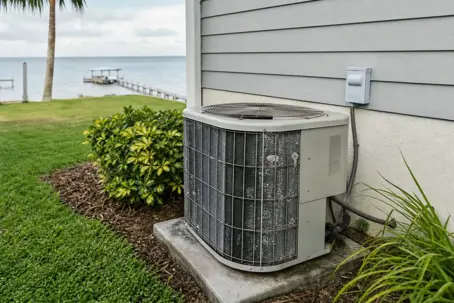
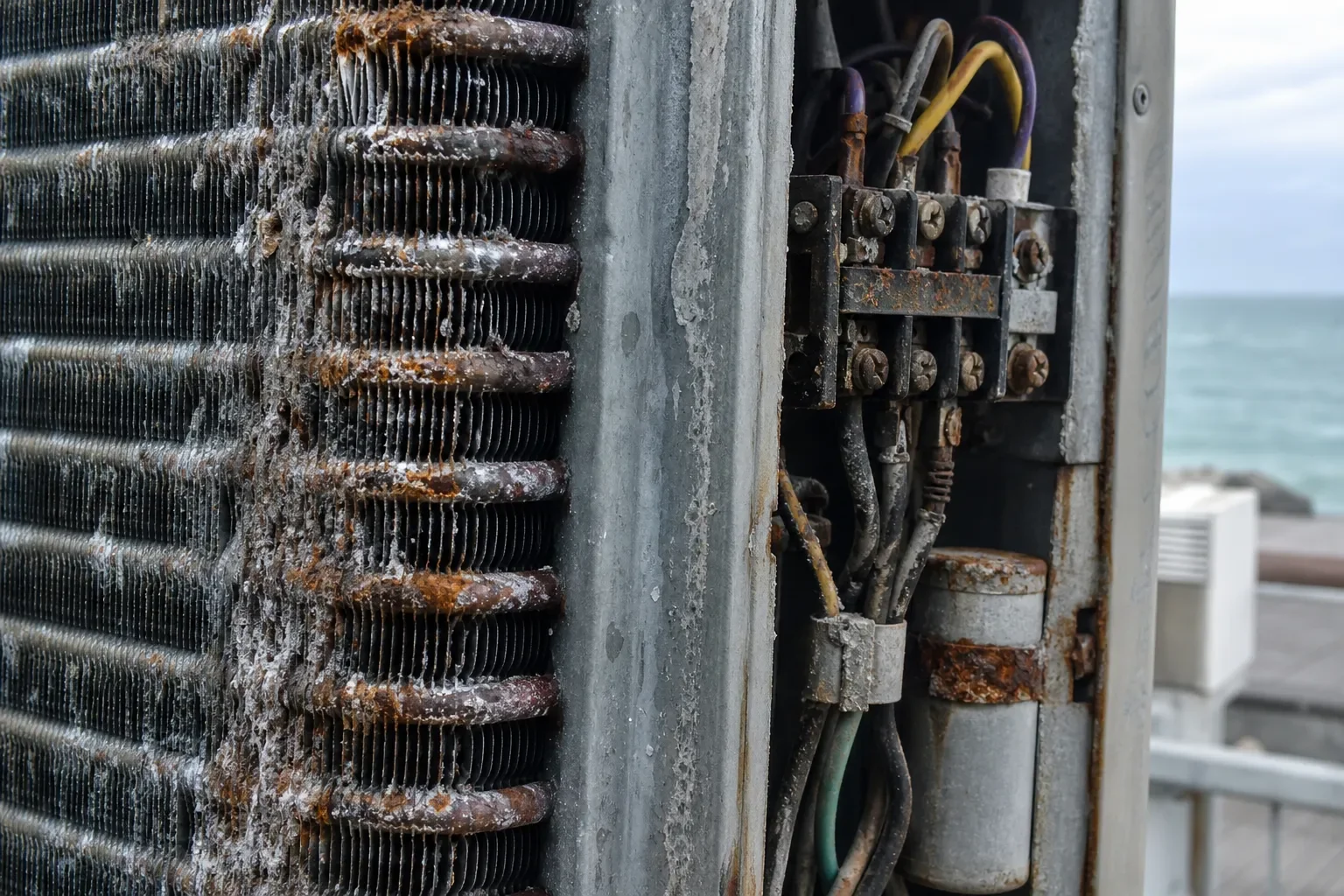
Salt does not need direct ocean spray to become a problem. Fine airborne salt particles can travel inland, settle on condenser coils and metal surfaces, and combine with humidity to create a corrosive film. Once that film builds up, heat transfer can decline and metal parts may begin to pit or degrade. For outdoor AC equipment, this matters because the condenser section depends on clean, intact surfaces to release heat efficiently. As corrosion increases, the unit can work harder, run longer cycles, and deliver less comfort inside the building.
Electrical areas are also vulnerable. Coastal corrosion can affect terminals, contact points, and wire connections, leading to intermittent operation or unexplained shutdowns. In the early stages, you may notice performance inconsistencies rather than obvious failure. Later, the same corrosion can contribute to major component loss and expensive downtime. That is one reason many owners in Gulf Breeze start evaluating HVAC system installation before the system fully fails. A planned replacement is typically easier to schedule and easier to budget for than a sudden loss of cooling during extreme heat.
How Corrosion Shows up Before a Complete Breakdown
Corrosion rarely announces itself with one dramatic symptom at first. More often, the warning signs build gradually: cooling that feels weaker than it used to, rooms that take longer to reach the thermostat setting, longer run times, and utility bills that rise even when usage habits stay similar. If your system seems to be losing its ability to cool evenly, there may be value in comparing those symptoms with this guide on why a newer AC setup can still struggle to cool evenly. Even when the layout and airflow matter, a corroded outdoor unit can still be a major piece of the problem.
Another common pattern is repeated minor trouble that never fully goes away. The system may trip on hot afternoons, struggle after storms, or recover temporarily after service only to decline again. Corroded coils can reduce efficiency. Rusting panels and fasteners can expose other parts to weather. Damaged wiring connections can create hard-to-trace reliability issues. When these conditions stack up, owners often reach a point where replacing the full system is more sensible than trying to preserve equipment that is already compromised by the coastal environment.
When HVAC System Installation Is the Smarter Step
For homes and light commercial properties in Gulf Breeze, HVAC system installation becomes the smart move when corrosion is no longer cosmetic and is clearly interfering with operation. If the condenser coil is deteriorating, if electrical connections keep showing signs of oxidation, or if outdoor cabinet damage is exposing the system to more moisture, replacement can protect you from escalating repair cycles. Installation is also worth serious consideration when the existing unit cannot keep up during high-demand weather, especially if comfort issues are becoming more frequent.
Owners who are trying to compare timing often ask whether they should wait one more season. In many cases, waiting only increases the chance of a disruptive failure when the equipment is under maximum strain. If you are evaluating replacement timing, review how long AC installation can take for homes so expectations are clear, and see why salt air can shorten HVAC system lifespan for a broader look at the long-term effect of coastal exposure. These patterns often support acting before the system reaches an emergency point.
- Cooling output has dropped even though the system runs longer
- Energy bills keep climbing without a clear usage change
- Visible rust, coil damage, or cabinet deterioration is increasing
- Electrical or startup issues are becoming more frequent
- You want to replace on your schedule instead of during a breakdown
What a Well-Planned Installation Can Improve in Gulf Breeze
A properly planned HVAC system installation in Gulf Breeze does more than swap out old equipment. It gives you the chance to correct comfort and performance issues that may have been masked by years of system decline. If certain rooms have felt warmer than others, airflow and equipment matching should be reviewed as part of the installation process. For more on uneven cooling symptoms, you can compare your situation with this article on why some rooms stay warmer than others. While every property is different, replacement planning is often the best time to address those long-standing problems.
Installation planning can also help identify supporting issues that may reduce the benefit of a new system if left unaddressed. For example, poor duct performance can undermine comfort and efficiency even when the equipment itself is new. If you suspect airflow losses are part of the bigger picture, take a look at how Gulf Breeze homeowners can decide between air duct replacement and repair services. Reviewing the full system helps ensure the new installation performs the way it should under local coastal conditions.
Why Acting Early Is Better Than Waiting for Failure
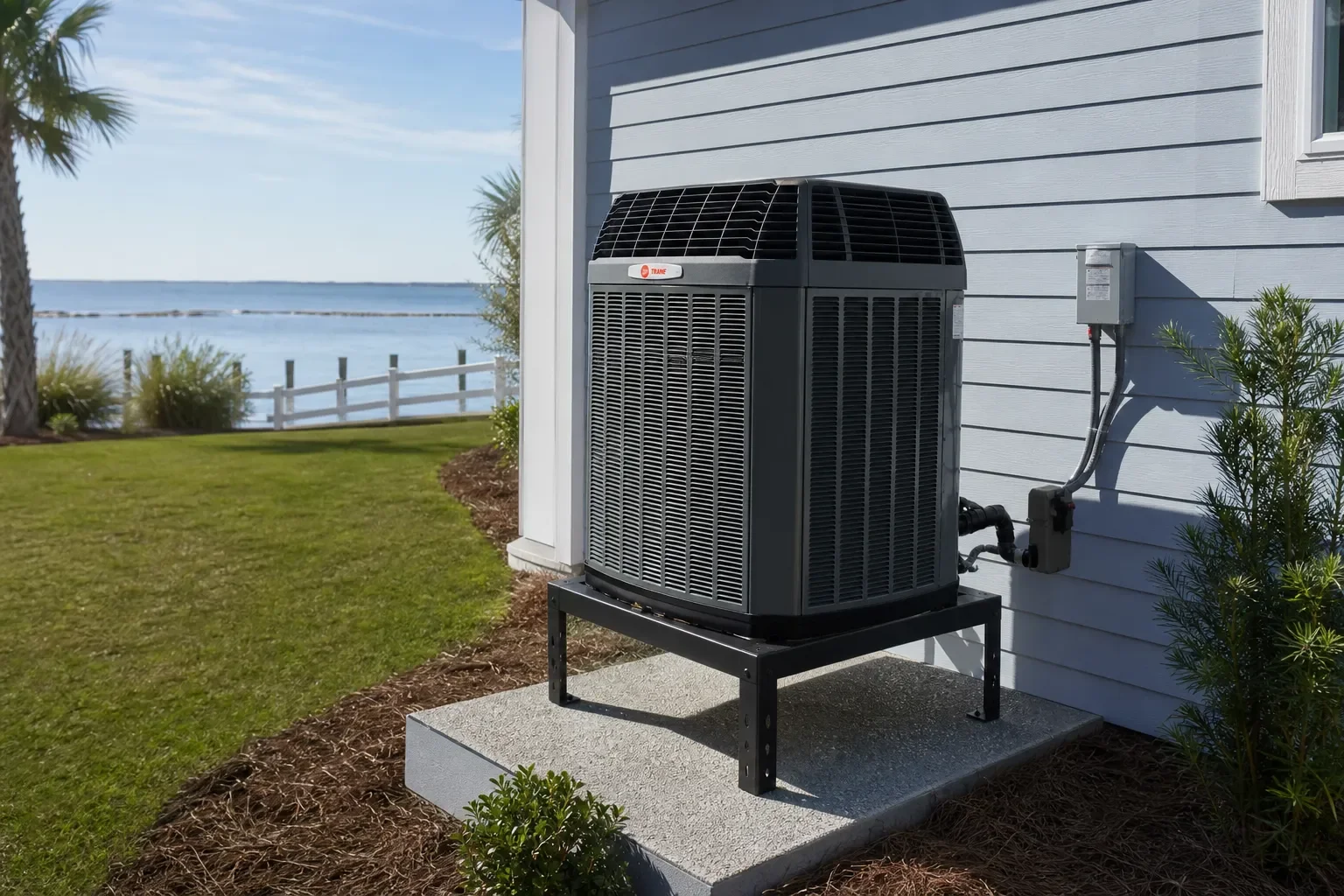
There is a major difference between replacing a system because you have evaluated the warning signs and replacing it because cooling has stopped entirely. Early planning gives you time to consider equipment options, schedule installation with less urgency, and prepare the property for the work. Waiting for a failed system usually means making decisions under pressure, often during the hottest part of the season when comfort matters most. For many Gulf Breeze owners, that alone is reason enough to move forward before corrosion-related problems become a full outage.
Another advantage of early action is predictability. A corroded system may still run today, but that does not mean it is dependable tomorrow. Once salt exposure has begun to affect critical components, the decline can be uneven and frustrating. One week the system seems acceptable; the next, it struggles to maintain temperature. If your current equipment has entered that stage, HVAC system installation in Gulf Breeze can offer a more dependable path than hoping the next hot spell does not push the system past its limit.
Choosing the Right Next Step for Your Property
Every property has a different threshold where installation becomes the most practical answer, but coastal corrosion should always carry extra weight in Gulf Breeze. Surface rust alone may not tell the whole story; the more important question is whether the system is still operating efficiently, consistently, and safely. When salt exposure has contributed to declining performance and ongoing reliability concerns, replacement planning becomes a proactive investment in comfort rather than a reactive response to a crisis.
At Save Now Cooling, we help property owners make informed decisions about HVAC system installation in Gulf Breeze based on real operating conditions, not guesswork. If your current AC is showing the effects of coastal wear, now is the time to evaluate whether a new system will provide better efficiency, steadier cooling, and fewer surprise interruptions. In Gulf Breeze, where salt air can quietly shorten equipment life, a timely HVAC system installation is often the clearest way to stay ahead of bigger problems.