
What You'll Learn
- See how salt air damages outdoor AC components
- Learn when repair costs stop making financial sense
- Understand performance signs that point to replacement
- Know what to expect from HVAC system installation
- Make a better long-term decision for your property
In Navarre, HVAC system installation is often more than a comfort upgrade—it can be a practical response to the coastal conditions that steadily wear down air conditioning equipment. Salt-laden air, persistent humidity, and long cooling seasons can accelerate corrosion on key components, reducing efficiency and increasing breakdown risk. For homeowners and local business owners, the question is not only why a system is struggling, but also when another repair no longer makes sense compared with a properly planned replacement.
If you are evaluating whether to keep repairing an aging system, it helps to start with the local environment. Coastal exposure can shorten equipment life even when maintenance has been consistent. That is why many property owners reviewing a seasonal HVAC system installation checklist for Navarre homes also want a clearer framework for deciding when a new system is the better investment.
How Salt Air Affects Air Conditioning Equipment in Navarre
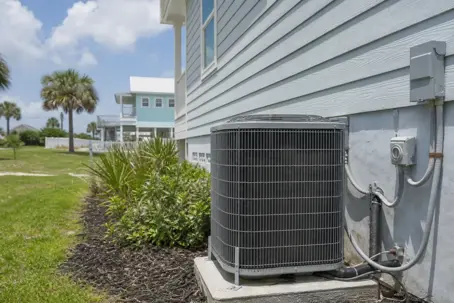
Salt air is highly corrosive. Once airborne salt settles on an outdoor condenser, it can begin attacking metal surfaces and protective coatings. Over time, that corrosion can weaken the condenser cabinet, damage fasteners, and reduce the ability of the unit to reject heat efficiently. In Navarre, where systems often run hard for much of the year, even small losses in performance can translate into higher utility costs and more wear on the compressor.
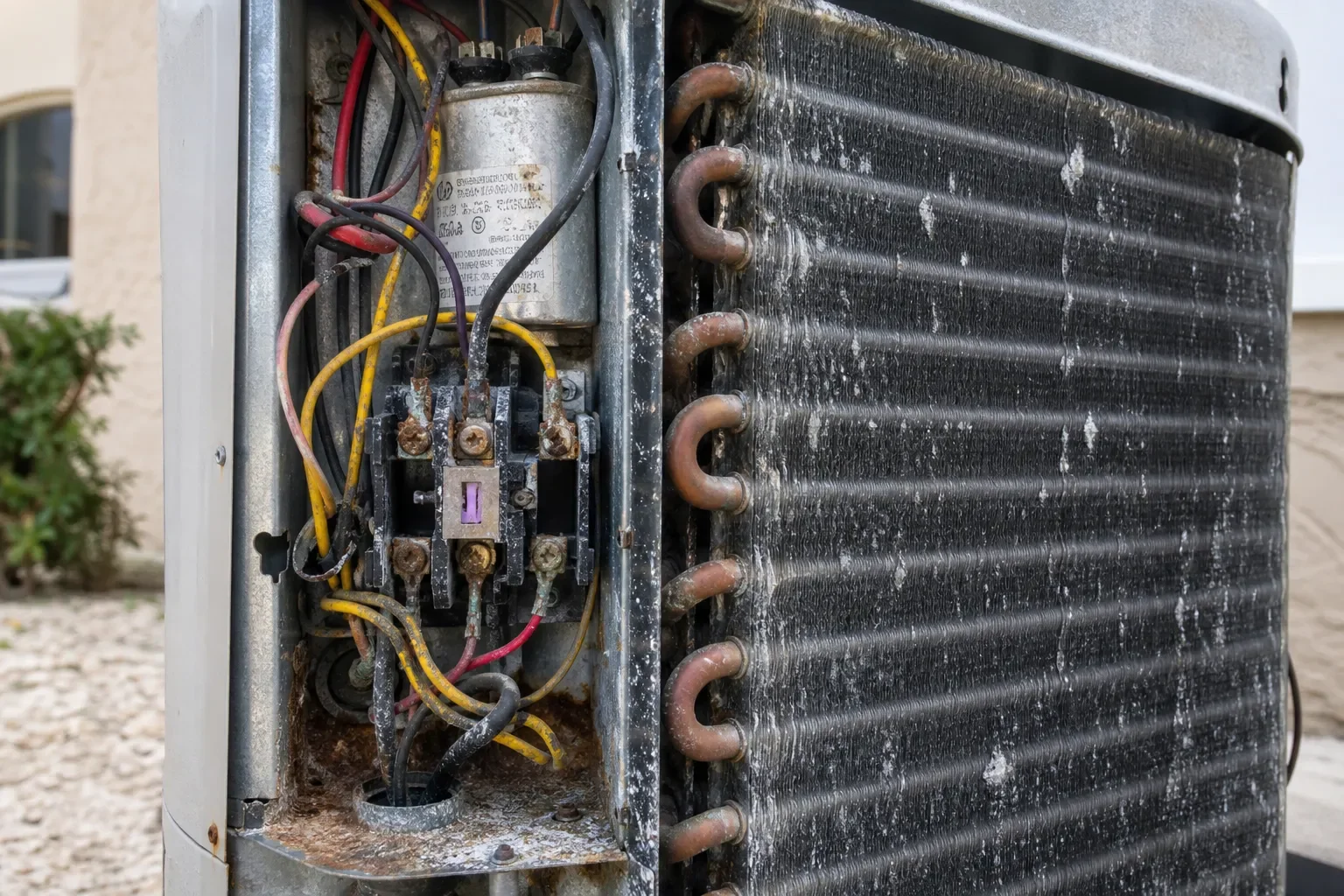
The condenser coil is especially vulnerable. Corrosion on the coil can reduce heat transfer, meaning the system has to work longer to reach the thermostat setting. That extra runtime stresses motors, capacitors, and the compressor. If your existing equipment is already struggling, reading about how to decide between repair and central air replacement can help you compare short-term fixes with the long-term value of HVAC system installation.
Electrical connections also suffer in coastal environments. Salt and moisture can contribute to oxidation and corrosion at contact points, which may lead to intermittent failures, voltage drops, nuisance shutdowns, or burnt wiring. These issues can be difficult to chase because a repair may restore operation for a while, only for another corroded connection to fail later. That pattern is one of the clearest signs that the problem may be broader than a single part.
The Components Most Commonly Damaged by Coastal Corrosion
When corrosion takes hold, several core components can be affected at once. Condenser coils may pit or deteriorate. Electrical terminals can loosen or oxidize. Contactors may become unreliable. Fan motors and mounting hardware can rust. Even refrigerant line connections can become compromised over time. In many cases, the system still turns on, but overall performance declines little by little until comfort problems become impossible to ignore.
- Condenser coils lose heat-transfer efficiency
- Electrical connections become unstable or unsafe
- Cabinet panels and fasteners rust and weaken
- Fan assemblies face more strain and premature wear
- Repeated corrosion can trigger a cycle of ongoing repairs
Because these failures often overlap, replacing one part does not always restore dependable operation. A system may get a new capacitor or contactor, only to continue underperforming because the coil is also compromised. If you have been comparing options, resources on when installation makes more sense than another minor service visit can help put isolated repairs into a bigger picture.
Performance Problems That Suggest Repair Is No Longer the Best Value
Not every repair should lead to replacement, but repeated issues in a coastal setting deserve a closer look. If your system in Navarre is cooling unevenly, running longer than it used to, or struggling during the hottest parts of the day, corrosion may be reducing overall capacity. Utility bills may rise even though thermostat settings have not changed. Indoor humidity may feel harder to control. These are signs the equipment may be losing the battle against age and environmental exposure.
Another warning sign is frequency. One repair every several years is very different from service calls that keep stacking up. If the system has needed multiple electrical repairs, coil-related work, or repeated component replacements, it may be time to stop thinking in terms of isolated breakdowns and start evaluating the full cost of ownership. Homeowners comparing comfort issues sometimes also review articles on why some rooms stay warmer than others, since poor airflow and declining equipment performance often appear together as a system ages.
When HVAC System Installation Makes More Sense in Navarre
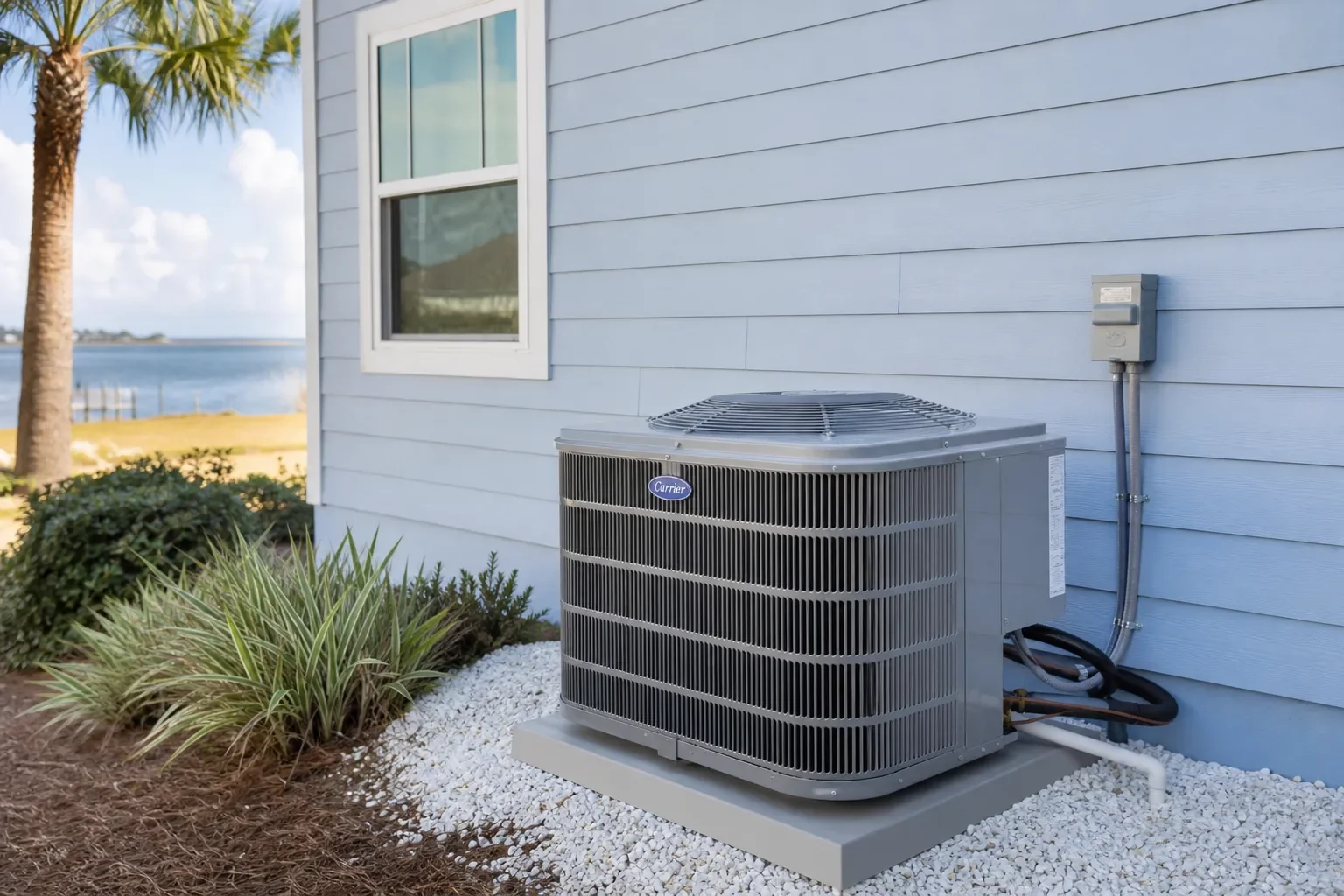
HVAC system installation in Navarre often becomes the smarter choice when repair costs are recurring, the system is older, and the underlying coastal damage is unlikely to stop. A new installation can provide more dependable cooling, better energy performance, and a fresh start with properly matched equipment rather than a collection of aging parts. For business owners, that can also mean fewer disruptions and better environmental control for staff, customers, or inventory.
Replacement is especially worth considering if the outdoor unit shows visible rust, the condenser coil is deteriorating, or electrical failures keep returning. In these cases, another repair may restore operation briefly without solving the corrosive conditions that caused the failure. If you want a clearer picture of the process, it is helpful to review what to expect from a professional installation project and compare that with the uncertainty of ongoing repair cycles.
What to Evaluate Before Moving Forward
Before committing to HVAC system installation, it is wise to assess more than the outdoor equipment alone. Duct condition, airflow balance, insulation, and building layout all influence results. If a property has additions, converted rooms, or persistent airflow limitations, those factors should be addressed during system planning so the new equipment is not forced to compensate for hidden distribution problems. That is why some owners also explore guidance on air distribution needs for added or reworked spaces while considering replacement.
Timing matters too. Waiting until the system fails completely during peak heat can narrow your options and add pressure to the decision. Planning ahead allows for better equipment selection, scheduling, and installation quality. If you are trying to decide when to act, reviewing how long installation typically takes can help you prepare for the project with fewer surprises.
Why a Long-Term View Usually Wins
The cheapest immediate repair is not always the lowest overall cost. In Navarre, coastal corrosion can turn an older AC system into a repeating expense: one part fails, another weak point appears, efficiency drops, and comfort continues to suffer. By contrast, a well-planned HVAC system installation can improve reliability, reduce the likelihood of repeated breakdowns, and give you a system better suited to the local environment and your building's actual cooling demands.
For many property owners, the tipping point comes when they realize they are paying for repairs without gaining confidence in the system. If the equipment is corroded, inconsistent, and increasingly expensive to keep alive, replacement is often the more strategic decision. Save Now Cooling can help evaluate whether your current system still justifies repair or whether HVAC system installation in Navarre is the better path for dependable comfort and long-term value.