
What You'll Learn
- Learn why evening run times can point to hidden airflow issues
- See how a tune-up helps separate AC problems from duct-related symptoms
- Understand when testing confirms the source of poor cooling
- Find out how better maintenance supports comfort and lower energy use
If your air conditioner cools reasonably well during the day but seems to run much longer after sunset, scheduling a seasonal AC tune-up in Pensacola is often the smartest first step. Many homeowners assume extended evening run times automatically mean the equipment itself is failing. In reality, the issue may be related to airflow restrictions, leakage, setup problems, or wear that a professional tune-up can identify before you spend money chasing the wrong fix. For homes and light commercial properties alike, a thorough maintenance visit helps explain why your system struggles to shut off when outdoor temperatures should be easing demand.
That matters because long evening cycles usually do not happen in isolation. They often come with uneven room temperatures, rising utility bills, humidity that feels harder to control, or a system that seems to work harder than it should for the comfort it delivers. A detailed seasonal AC tune-up in Pensacola gives technicians the opportunity to inspect operating performance, measure airflow behavior, check components under load, and spot warning signs that point beyond the obvious. If you want a helpful baseline before making larger decisions, you may also want to review what Pensacola homeowners should know about seasonal AC tune-up timing before replacing an older system.
Why an AC Can Run Longer After Sunset Even When It Cools Fine During the Day
At first glance, late-evening overrun sounds backward. If the hottest part of the day has passed, your system should be getting a break. But cooling performance depends on more than outdoor temperature alone. Heat stored in the attic, walls, ceiling surfaces, and duct pathways can continue affecting indoor comfort after sunset. If conditioned air is not reaching living areas efficiently, the thermostat may stay unsatisfied longer than expected. During a seasonal AC tune-up in Pensacola, a technician can determine whether the equipment is operating correctly or whether hidden distribution issues are making a normal system look weak.
In many cases, homeowners first notice the symptom rather than the cause. Bedrooms may stay warm at night, a back office may feel stuffy, or one side of the building may lag behind the thermostat setting. Those are clues that the system may be producing cooling but not delivering it effectively. Similar symptom-based confusion happens with other operating issues too, which is why articles like this guide on AC short cycling and when a seasonal AC tune-up points to repair or replacement are useful for understanding how maintenance helps narrow the diagnosis.
How a Seasonal AC Tune-Up Helps Identify Hidden Airflow Problems
A professional tune-up is not just a quick filter glance. Done properly, it is a structured inspection of system condition and performance. The technician checks critical components, verifies safe and efficient operation, and looks for signs that the air conditioner is being forced to compensate for something else. If your AC runs long into the evening, the tune-up can reveal whether airflow is too low, whether coils are dirty, whether blower performance is off, or whether thermostat and cycling behavior suggest a deeper comfort-delivery issue rather than a simple refrigerant or electrical problem.
This is where the visit becomes especially valuable. Homeowners often spend years reacting to symptoms: another service call, another part, another adjustment. But a seasonal AC tune-up in Pensacola creates a fuller picture. It can show whether the system itself is underperforming or whether it is doing its job while the home still feels uncomfortable. That distinction helps you avoid repeated repairs that do not address the reason the AC keeps running. If startup odors or moisture-related concerns are also part of the story, this article on musty AC startup smells and tune-up decisions offers another example of how maintenance clarifies the right next step.
Common Clues That Point Beyond the AC Unit Itself
Some properties in Pensacola have cooling systems that are mechanically capable of doing the job, but the delivered comfort still falls short. Warning signs include rooms that never seem to catch up, weak airflow from certain vents, temperature swings between floors or zones, and a unit that appears to run endlessly in the evening while indoor comfort improves only slowly. During a seasonal AC tune-up in Pensacola, these patterns matter because they suggest that the equipment may be compensating for hidden losses or restrictions somewhere in the overall system.
- Long cooling cycles after sunset despite a moderate thermostat setting
- Hot or stuffy rooms even while the main area feels acceptable
- Noticeably weak airflow at some supply vents
- Higher energy bills without a clear change in usage habits
- Repeated service history with comfort issues that keep returning
These are exactly the kinds of patterns that make routine maintenance more than a checklist item. Technicians use the tune-up to compare expected performance with what the property is actually experiencing. If the system is clean, charged, and operating normally but comfort remains inconsistent, that finding is useful. It tells you the problem may not be solved by continuing to focus only on the equipment. For a related discussion on escalating operating costs, see why energy bills can keep rising in Pensacola even after AC repairs.
When Diagnostic Testing Becomes the Next Smart Step
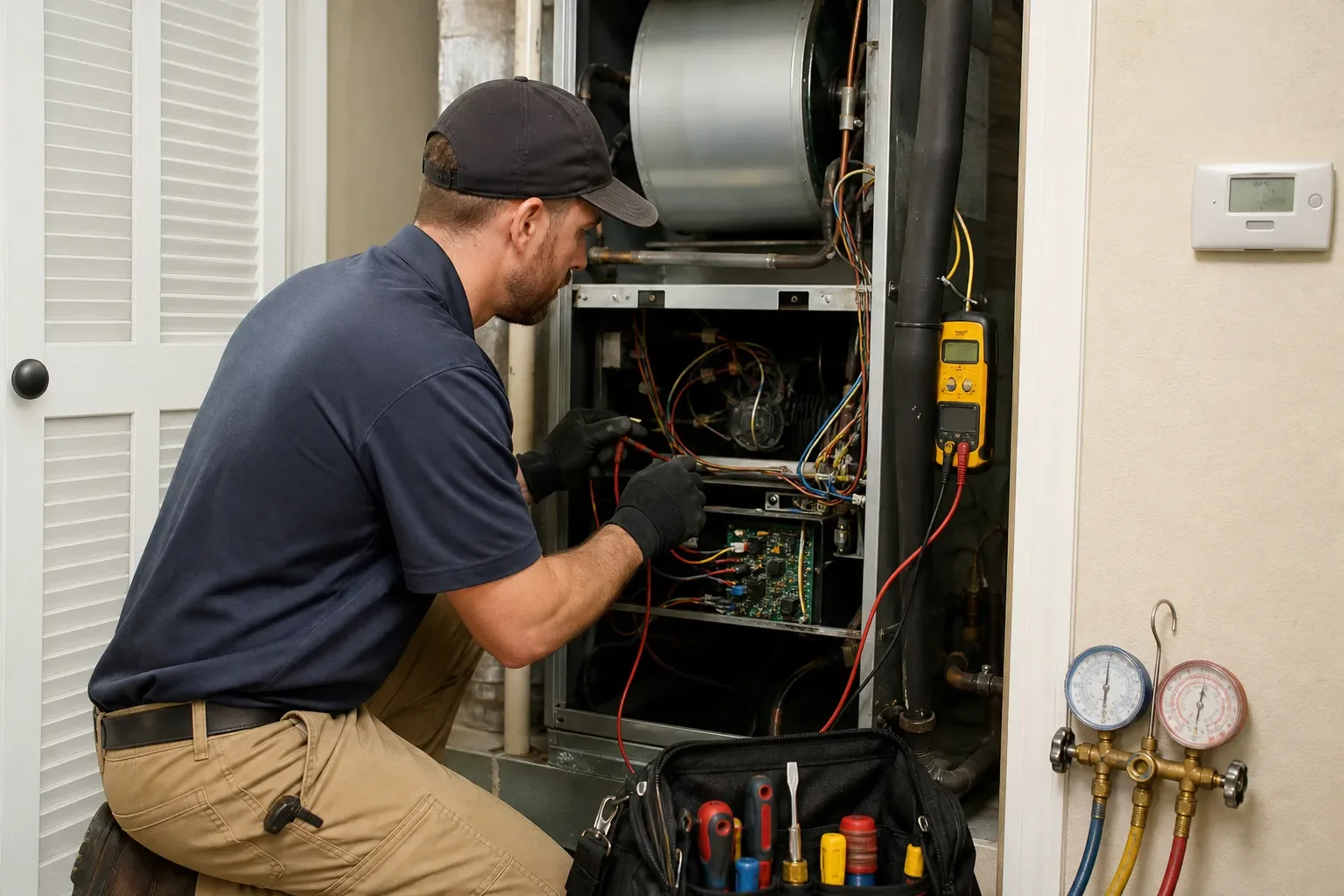
One of the biggest benefits of a seasonal AC tune-up in Pensacola is knowing when to stop guessing. If the maintenance inspection shows that the unit is generally operating as expected, but your comfort complaints persist, the next recommendation may be diagnostic testing focused on airflow and system performance. That can help confirm whether the AC is moving enough air, whether losses are occurring before conditioned air reaches occupied rooms, and whether the system is being forced into longer cycles because the thermostat is not seeing the results it should.
This step matters because evening run-time issues are easy to misread. A homeowner may assume the machine is aging out, while the real problem is that cooling is not being distributed effectively. In other cases, the tune-up may uncover a combination of maintenance needs and larger system concerns. Save Now Cooling can use the findings from a seasonal AC tune-up in Pensacola to help property owners decide whether simple maintenance, further diagnostics, or a broader corrective plan makes the most sense. If your system behavior gets worse around weather shifts, this post about AC problems after afternoon storms gives more context on how changing conditions expose existing weaknesses.
Why Repeated Repairs Alone May Not Solve the Evening Run-Time Problem
It is tempting to keep replacing parts whenever the system seems overworked. Sometimes that is necessary, but it is not always sufficient. If the root cause involves poor airflow delivery, leakage, or system imbalance, the air conditioner may continue to run longer after sunset even after individual repairs are completed. That is why maintenance is so valuable as a decision-making tool. A well-executed seasonal AC tune-up in Pensacola helps you avoid treating every symptom like an isolated equipment failure.
For homeowners trying to decide whether maintenance is still the right path, it can help to compare your situation with similar scenarios. You might read how Pensacola homeowners can tell if an AC tune-up is enough or how often to schedule a seasonal AC tune-up to understand where your current symptoms fit. The goal is not to push unnecessary work. It is to make sure your next step is based on evidence rather than frustration.
What Homeowners in Pensacola Gain From Proactive Tune-Up Service
When evening run times are addressed early, the benefits go beyond lower stress. A seasonal AC tune-up in Pensacola can support steadier comfort, better energy efficiency, improved component life, and fewer surprise breakdowns during heavy-use periods. Just as importantly, it gives you a clearer understanding of whether the AC itself is the issue or whether comfort problems are being created elsewhere. That kind of clarity helps you budget more intelligently and avoid paying repeatedly for fixes that do not resolve the underlying complaint.
Homeowners and local business owners often wait until a problem becomes urgent. But if your AC keeps running after sunset, the system is already telling you something about performance. Scheduling a seasonal AC tune-up in Pensacola with Save Now Cooling is a practical way to get answers, improve reliability, and move toward the right solution based on actual system behavior instead of assumptions.